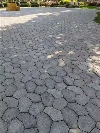
Yes, red porphyry tiles are considered an environmentally friendly material for landscaping projects. As a natural volcanic stone, porphyry offers durability, sustainability, and minimal environmental impact throughout its life cycle. These characteristics make it a popular choice for garden paths, patios, plazas, and urban landscape design.


Below are several reasons why red porphyry tiles are widely regarded as a sustainable landscaping material.
1. Natural Stone With Minimal Processing
Red porphyry is a naturally occurring volcanic rock that requires relatively limited processing compared with many manufactured paving materials.
Production generally involves:
quarry extraction
cutting or splitting into tiles
surface finishing such as flamed or natural split
Because there is no chemical manufacturing process, the environmental footprint is relatively low.

2. Extremely Long Service Life
One of the most important environmental advantages of porphyry is its exceptional durability.
Porphyry paving can last several decades or even more than 50 years when installed correctly. A long lifespan reduces the need for replacement materials and lowers the overall consumption of resources over time.
3. Reusable and Recyclable Material
Natural porphyry paving stones can often be:
reused in other construction projects
reclaimed from historic streets
recycled as building aggregate
This reusability helps reduce construction waste and supports circular construction practices.
4. Low Maintenance Requirements
Porphyry tiles require very little maintenance compared with many artificial paving materials.
Typical maintenance may include:
- occasional cleaning
- joint sand refilling
- periodic inspection
Since chemical cleaners and coatings are usually unnecessary, the environmental impact during the usage phase remains low.

5. Good Drainage for Landscape Design
When installed with sand joints or permeable systems, porphyry paving can support natural water drainage.
This helps:
- reduce surface runoff
- improve soil water infiltration
- support sustainable urban drainage systems (SUDS)
- Such features are increasingly important in modern landscape planning.
6. Natural Appearance in Landscape Architecture
Red porphyry tiles blend well with natural environments due to their warm reddish tones and organic stone textures. Landscape architects often use porphyry paving to create outdoor spaces that harmonize with parks, gardens, and historic environments.
Common applications include:
- garden walkways
- outdoor patios
- park pathways
- landscape plazas
- pedestrian areas
Natural Stone Solutions from Zhenhao Stone
For landscaping and construction projects worldwide, Zhenhao Stone Company focuses on supplying high-quality natural stone building materials. The company offers a range of architectural stone products including red porphyry tiles, granite paving stones, marble, limestone, and other natural stone materials suitable for both outdoor and indoor applications.
With its natural durability and timeless aesthetic, red porphyry paving continues to be a sustainable and environmentally responsible choice for landscape design projects.