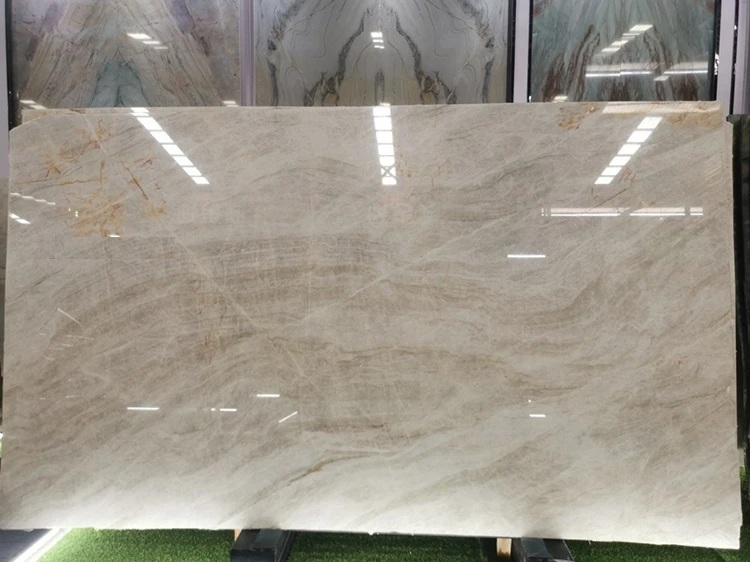
Yes - Taj Mahal Quartzite can stain if it is not properly sealed.
Although quartzite is a dense and durable natural stone, it is still slightly porous, which means liquids can penetrate the surface over time.
Why Staining Can Occur
- Natural porosity: Allows absorption of liquids if unprotected
- Light color tone: Makes stains (oil, cosmetics, soap residue) more visible
- Bathroom environment: Frequent exposure to water, lotions, and chemicals
Common Staining Risks (Unsealed Surface)
- Oil-based products: lotions, creams, makeup
- Colored liquids: hair dye, soap, shampoos
- Hard water deposits: mineral buildup causing dull spots
- Cleaning chemicals: may leave marks or discoloration

Role of Sealing
Applying a penetrating sealer significantly reduces staining risk:
- Creates an invisible protective barrier
- Slows down liquid absorption
- Makes cleaning easier and more effective
Note: Sealing does not make the surface completely stain-proof, but it provides critical protection time to clean spills.

Recommended Sealing Practice
- Initial sealing: Before or immediately after installation
- Reapplication: Every 6–12 months depending on usage
- High-use areas (vanity tops): May require more frequent sealing
Simple Water Test
To check if sealing is needed:
- Place a few drops of water on the surface
- If water darkens the stone quickly → resealing required
- If water beads on surface → protection is still effective
B2B Recommendation
For project applications:
- Always specify pre-sealed or site-sealed quartzite
- Include sealing in installation scope
- Provide maintenance guidelines to end users
Conclusion
Taj Mahal Quartzite is highly durable, but without sealing, it remains vulnerable to staining, especially in bathroom environments. Proper sealing and maintenance ensure the surface retains its clean appearance, color consistency, and long-term performance in premium interior projects.