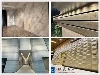
Yes, absolutely. Terrazzo is an excellent and highly versatile material for wall applications.
Its use on walls is a timeless technique, seen in everything from historic Italian buildings to modern minimalist interiors.

1. Methods of Application for Walls
Terrazzo Tiles ( this is the way we supplied )
Terrazzo is manufactured into manageable tile sizes (e.g., 24" x 24" or smaller). These are installed much like large-format stone tiles, using a suitable thin-set mortar. This method simplifies installation and is more accessible for residential or smaller commercial projects.
2. Key Advantages for Wall Use
- Seamless & Monolithic Aesthetic: Especially with large pre-cast panels, terrazzo can create a breathtaking, continuous surface with minimal visible joints, offering a clean and expansive look.
- Durability & Longevity: Terrazzo is incredibly hard-wearing, resistant to scratches, impacts, and moisture (when properly sealed in the case of cement-based terrazzo). It will not fade from UV light exposure.
- Hygiene & Easy Maintenance: Its non-porous surface (particularly epoxy and resin terrazzo) is easy to clean, resistant to mold and bacteria, and requires no ongoing sealing once installed, making it ideal for kitchens, bathrooms, and healthcare settings.
- Design Versatility: It offers unlimited customizability in terms of aggregate choice (glass, marble, quartz, granite, metal, etc.), color, and pattern. This allows for the creation of unique feature walls, logos, and intricate artwork.
- Sustainability: Terrazzo can incorporate a high percentage of recycled content (post-consumer glass, post-industrial stone fragments, etc.) and has an extremely long life cycle, reducing the need for replacement.
3. Critical Considerations and Challenges
Weight: Traditional cementitious terrazzo is very heavy (~18-20 lbs per square foot at ¾" thickness). The wall structure must be engineered to support this significant load. Epoxy-based terrazzo is significantly lighter (~30-40% lighter), making it a preferred choice for many wall applications, especially in high-rise buildings or on less robust structures.
Substrate Preparation: The wall substrate must be absolutely rigid, stable, flat, and capable of handling the weight. Any movement in the substrate will cause cracks in the terrazzo. Common substrates include:
Concrete or Concrete Masonry Units (CMU)
Properly braced and sheathed steel stud frameworks (for pre-cast panels)
Cement backer board
Installation Expertise: Terrazzo installation is a highly specialized trade. Installing it on walls requires even more skill and experience to ensure proper adhesion, prevent sagging, and achieve a perfectly flat, flawless finish. It is not a DIY project.
Cost: Terrazzo is a premium material. The cost of materials, coupled with the high level of skilled labor required for wall installation, makes it one of the more expensive wall cladding options.
Curing (for In-Situ): Wet-set terrazzo requires time to cure properly. On a wall, this process must be carefully managed to prevent deformation.
4. Ideal Applications for Terrazzo Walls
- Commercial Lobbies & Feature Walls: Creating a powerful first impression.
- Hospitality Interiors: Bars, restaurant accent walls, hotel reception areas.
- High-End Residential: Kitchen splashbacks, bathroom walls, shower surrounds, fireplace surrounds.
- Healthcare & Laboratories: Where hygiene and durability are paramount.
- Public Art & Murals: Utilizing the medium for large-scale artistic expressions.
Professional Recommendation
For a successful terrazzo wall project, it is imperative to:
- Consult a structural engineer to verify the wall can support the load.
- Work with an experienced terrazzo contractor who has a proven portfolio of vertical installations.
- Decide on the matrix type (epoxy vs. cement) early on, as this affects weight, cost, and design possibilities.
- Strongly consider pre-cast panels for their reliability, quality control, and easier installation on large surfaces.
In summary, terrazzo is not only suitable for walls but can create a stunning, durable, and unique interior or exterior feature when designed and installed by professionals using the correct methods.