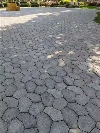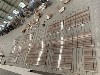

No, travertine pavers do not require grout in the traditional sense (like tile grout), but they almost always need some form of joint filler between them for stability, weed prevention, and drainage. Here's a detailed breakdown:


Why Joints Need Filling (Even if Not "Grout")
- Stability & Locking: Filling the joints locks the pavers together, creating a stable, interlocked surface that resists shifting, spreading, or settling. Without filled joints, pavers can move independently.
- Weed & Insect Prevention: Open joints allow weeds, grass, and ants to grow up between the pavers, ruining the appearance and potentially destabilizing the base.
- Drainage Control: Properly filled joints allow water to drain through the joint material down to the base, preventing surface pooling and erosion. Open joints can wash out the base sand.
- Debris Prevention: Prevents dirt, sand, gravel, and organic matter from accumulating in the gaps.
- Aesthetics: Creates a clean, finished look.
Common Joint Filling Materials for Travertine Pavers
1. Polymeric Sand (Most Common & Recommended):
* What it is: Fine sand mixed with polymers (binders) that activate when moistened.
* How it works: Swept into the joints, then lightly misted with water. The polymers harden, creating a flexible, durable bond that locks the pavers while remaining permeable.
* Pros:
* Excellent resistance to weeds, ants, and washout.
* Flexible (won't crack like rigid grout).
* Allows drainage.
* Wide range of colors to match/complement the stone.
* Relatively easy to install.
* Cons: More expensive than regular sand. Must be installed perfectly dry (pavers and sand) and requires precise watering. Can be harder to remove/replace later.
2. Regular Jointing Sand (Builder's Sand, Concrete Sand):
* What it is: Plain, dry, washed sand (often coarse-grained).
* How it works: Swept into the joints repeatedly until packed. Relies on mechanical interlock.
* Pros: Inexpensive, simple to install and top up.
* Cons:
* Washes out easily with rain/irrigation.
* Does NOT prevent weeds or insects effectively.
* Requires frequent replenishment (often yearly).
* Limited color options (usually beige/grey).
* Use Case: Primarily for temporary installations or very tight budgets. Not ideal for long-term stability.
3. Traditional Cementitious Grout (Less Common & Generally NOT Recommended for Pavers):
* What it is: A cement-based mixture similar to tile grout.
* Pros: Very rigid, solid surface. Wide color range.
* Cons (Significant for Pavers):
* Rigidity: Pavers expand/contract with temperature and shift slightly under load. Rigid grout WILL crack, crumble, and eventually fail.
* Difficult Installation: Messy, requires precise mixing and tooling.
* Poor Drainage: Creates an almost impermeable surface, leading to water pooling or forcing water sideways.
* Staining: Porous grout can stain easily, especially next to travertine.
* Hard to Repair: Removing and replacing damaged sections is difficult.
* Use Case: Sometimes used for very small, decorative, indoor travertine installations (like a fireplace hearth border), but avoid for patios, walkways, driveways, or pool decks.
4. Gravel or Small Aggregate (Less Common):
* What it is: Small decorative stones (e.g., pea gravel).
* Pros: Natural drainage, unique aesthetic.
* Cons: Doesn't lock pavers well, unstable underfoot, difficult to walk on (especially barefoot), weeds still grow, hard to keep contained/clean.
* Use Case: Primarily for very wide joints in rustic garden paths, not standard paver installations.
Key Considerations for Travertine Paver Joints
Joint Width: Travertine pavers are often installed with joints ranging from 1/8" to 1/2+". The width depends on the paver cut (chiseled/tumbled edges need wider joints than precision-cut) and the desired look. Wider joints need more joint filler.
Paver Edge Type:
- Chiseled/Tumbled Edges: Require wider joints (typically 3/8" to 1/2"+) to accommodate the natural irregularity. Polymeric sand is ideal here.
- Precision-Cut (Guillotined) Edges: Can be installed with tighter joints (1/8" to 3/8"). Polymeric sand still works well, though installation requires more care to fully fill narrow joints.
Base Preparation: A proper, compacted gravel base and leveling sand bed are CRITICAL for any paver installation, regardless of joint filler.
Sealing: After the joints are filled and fully cured (especially important for polymeric sand - wait 1-3 days), sealing the entire surface (pavers AND joints) is highly recommended. This protects the travertine and helps bond the sand particles in the joints for even better longevity.
Conclusion: While you don't use "grout" like you would for bathroom tile, travertine pavers absolutely require the joints between them to be filled, primarily with polymeric sand for most outdoor applications. This provides stability, prevents weeds and washout, allows drainage, and gives a finished, professional appearance. Avoid rigid cementitious grout for pavers. Proper base preparation and eventual sealing are also essential parts of a successful travertine paver installation.