


Yes, black granite does exist, but there's an important distinction to understand between scientific geology and commercial terminology:
1. Scientifically (Strict Definition):
True granite is an igneous rock composed primarily of quartz (clear/white), feldspar (often pink or white), and mica (black or white). By this strict definition, a rock cannot be pure black and be called granite because it must contain significant quartz and feldspar, which are light-colored minerals.
However, some granites can be very dark gray or appear almost black if they contain a very high concentration of dark minerals like biotite mica or amphibole (hornblende), with minimal light-colored minerals showing. Examples include:
Shanxi Black (China): A very dark gray, fine-grained granite.
Black Pearl (Norway): A dark gray granite with large, dark crystals.
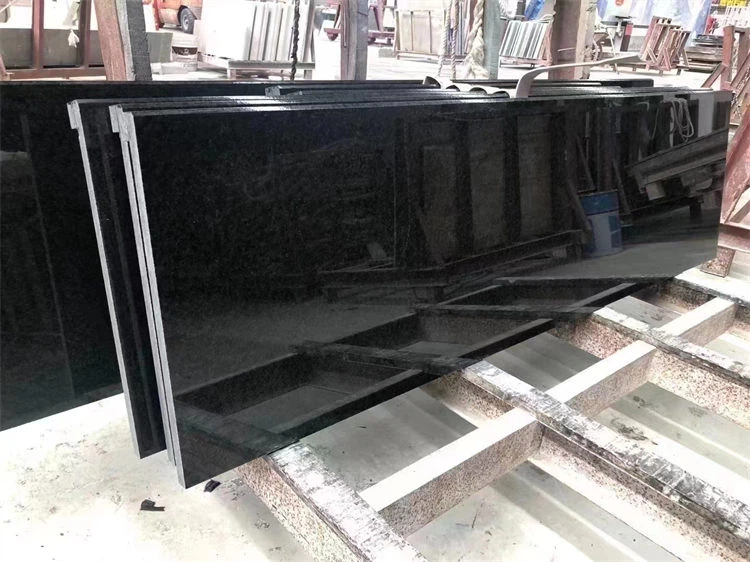
2. Commercially (Stone Industry):
This is where "black granite" is extremely common and popular. The term is used very broadly for any dense, hard, dark-colored igneous or metamorphic rock that takes a high polish and is suitable for countertops, tiles, monuments, etc.
Many rocks sold as "black granite" are not true granite geologically. The most common types are:
- Gabbro: A coarse-grained igneous rock with almost no quartz. It's composed mainly of dark minerals like pyroxene and plagioclase feldspar (which can be dark gray). Absolute Black granite (India) is almost always gabbro.
- Dolerite/Diabase: Similar to gabbro but with a finer grain size. Often sold as black granite.
- Anorthosite: Composed almost entirely of dark plagioclase feldspar. Labradorite (known for its iridescent flash) is a variety of anorthosite and is frequently sold as a decorative "black granite."
- Gneiss: A metamorphic rock that can be very dark. Nero Impala (South Africa) is a popular black gneiss sold as granite.
- Basalt: A fine-grained volcanic rock, sometimes sold as "black granite" when polished, though less common for countertops due to its fineness.
In Summary:
Geologically: Pure black granite doesn't exist. Very dark gray granites do exist but are less common.
Commercially: "Black granite" is abundant and popular. It refers to a variety of dark, hard, polishable stones, most commonly gabbro, diabase, anorthosite (like labradorite), or gneiss.
So, when you see beautiful, jet-black countertops or monuments labeled as "granite," they almost certainly exist, but they are geologically likely to be gabbro or another dark igneous/metamorphic rock. The term "black granite" is a functional commercial label, not a strict geological one.


