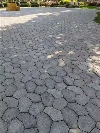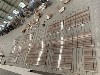

Quartzite is a beautiful and durable natural stone that is a popular choice for countertops, flooring, and wall cladding. It is formed from pure quartz sandstone through a natural process of extreme heat and pressure, resulting in a metamorphic rock that is highly resistant to scratches, stains, and heat.

The formation of quartzite begins with the deposition of quartz-rich sandstone in ocean beds or in deserts. Over millions of years, the sandstone undergoes a natural process of cementation, where the grains of sand are stuck together by minerals such as silica, calcium carbonate, or iron oxide. As the sandstone becomes more compact, it becomes a harder and more durable rock.
However, if the sandstone is exposed to intense heat and pressure, such as during the collision of tectonic plates or during volcanic activity, it undergoes metamorphism, which transforms it into quartzite. During this process, the sandstone recrystallizes, with the individual quartz grains growing together into a solid, homogeneous mass. The resulting rock is much harder, denser, and more resistant to weathering than the original sandstone.
The colors of quartzite range from white to gray, green, brown, and pink, depending on the impurities present during its formation. Some types of quartzite have swirling patterns or veining that add natural beauty to their appearance.
Quartzites Available
We are a trusted partner to our customers.