Honed granite is granite that has undergone a specific finishing process to achieve a smooth, matte (non-reflective), velvety surface with little to no shine. It differs significantly from the high-gloss, mirror-like finish of polished granite.

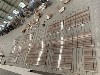
Here we take our G023 Grey Landscape Stone ( Polished VS Honed ) as an example, for your reference.


Here's how the honing process typically works:
1. Initial Grinding: The granite slab starts with a rough surface after being cut from the quarry block. It first goes through coarse grinding to level the surface and remove major saw marks or imperfections.
2. Progressive Abrasive Grinding (The Honing Stage): This is the core of the honing process.
- Abrasive Pads: A series of increasingly finer diamond or silicon carbide abrasive pads (grits) are used.
- Grit Sequence: The process starts with relatively coarse grits (e.g., 50, 100, 200) and progresses to finer grits (e.g., 400, 800).
- Machinery: Specialized machines, often large planetary polishers or bridge saws with grinding heads, move the abrasive pads over the surface of the granite under pressure.
- Water: Water is used copiously throughout the process for several reasons:
- Cooling: Prevents the granite and abrasives from overheating and potentially damaging the stone or the equipment.
- Lubrication: Reduces friction, allowing the abrasives to cut more effectively and smoothly.
- Slurry Removal: Flushes away the ground stone particles (slurry) created by the abrasion, preventing them from scratching the surface and keeping the abrasive pads clean for efficient cutting.
3. Stopping Before Polishing: The key difference between honed and polished finishes is where the process stops.
- Honed: The grinding process stops at a medium-fine grit level (usually around 200 to 800 grit). This leaves the microscopic crystals of the granite with a slightly textured, "open" surface that scatters light instead of reflecting it sharply, creating the matte look.
- Polished: To achieve a polish, the process continues with even finer grits (up to 3000 or more) and often includes polishing powders or oxides. These finer steps crush and burnish the microscopic peaks of the crystals until they become flat and aligned, creating a reflective surface.
4. Cleaning and Sealing: After honing, the slab is thoroughly cleaned to remove all traces of abrasive slurry. Honed granite is significantly more porous than polished granite. Sealing is absolutely crucial to protect the surface from stains, spills, and etching. High-quality impregnating sealers are applied to penetrate the pores and create a protective barrier.
Why Choose Honed Granite?
- Matte, Subtle Aesthetic: Offers a softer, more natural, understated, and contemporary look compared to high gloss.
- Hides Smudges and Light Scratches: Fingerprints, water spots, and minor surface scratches are much less noticeable on a matte surface.
- Less Slippery: Generally provides better traction when wet compared to polished granite, making it a popular choice for floors and shower surrounds.
- Velvety Feel: The surface has a distinctively smooth, soft tactile quality.
Important Considerations:
- Higher Maintenance: Due to its increased porosity, honed granite requires more diligent sealing (typically annually or as recommended by the installer/sealer manufacturer) and quicker cleanup of spills (especially acidic ones like wine, citrus, vinegar) to prevent staining or etching.
- Color Difference: Honed granite usually appears slightly lighter and less vibrant than its polished counterpart because light isn't reflected deeply into the stone.
- Etching Vulnerability: Acidic substances can etch (dull) the surface of honed granite more easily than polished, as the protective crystalline surface layer isn't burnished closed. Sealing helps but doesn't make it completely immune.
In essence, honing granite is a controlled grinding process stopped at a specific point to achieve a desirable matte finish, prioritizing a natural look and feel over high reflectivity, but demanding greater care in maintenance.