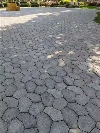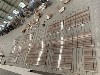

That's an excellent question! Yes, travertine is a specific type of limestone. Here's the breakdown:
1. Both are Carbonate Rocks: Both travertine and "regular" limestone are primarily composed of calcium carbonate (CaCO₃). This mineral comes from the shells and skeletons of marine organisms or, in the case of travertine, dissolved carbonate minerals in water.
2. How They Form - The Key Difference:
- Limestone: Typically forms in marine environments over very long periods. Layers of sediment (shells, coral, etc.) accumulate on ocean floors and are compacted and cemented together.
- Travertine: Forms much more rapidly from freshwater sources, specifically mineral springs (especially hot springs) and limestone caves. As calcium carbonate-saturated water emerges from the ground or drips in caves, changes in temperature, pressure, and CO₂ release cause the mineral to precipitate out of solution.
3. Distinctive Features of Travertine:
- Porous & Hole-y: Because it forms rapidly around gas bubbles (CO₂ escaping) and plant matter (like reeds) that later decay, travertine has characteristic holes, pores, and cavities. This is its most recognizable feature.
- Layered/Banded Appearance: It often shows visible banding or layers reflecting different depositional events.
- Crystalline Structure: The rapid precipitation often results in a more crystalline structure (sometimes including the mineral aragonite) compared to the typically micritic or fossiliferous texture of marine limestone.
- Colors: Common colors include beige, cream, walnut, gold, and rust-red, influenced by minerals like iron oxide in the water source. Marine limestone is often more uniformly gray or tan.
4. A Subset Relationship:
- Think of it like this: All travertine is limestone, but not all limestone is travertine.
- Travertine is a specific variety of limestone defined by its freshwater, often hydrothermal, origin and its characteristic porous texture.
Why does this matter (especially related to sealing)?
- Porosity: Travertine's extreme porosity (due to its formation process) is the main reason sealing is so crucial. Those holes and pores readily absorb liquids and stains if left unprotected.
- Mineral Composition: Being calcium carbonate, it's highly susceptible to etching from acids (vinegar, citrus, wine, some cleaners), just like marble and other calcareous stones. Sealing provides a vital barrier against this.
- Durability: While a durable stone overall, its porous nature makes it more vulnerable to damage from freeze-thaw cycles (outdoors) and wear in high-traffic areas compared to denser limestones or granites. Sealing helps mitigate this.
In Summary:
Travertine is absolutely classified as a type of limestone. Its unique formation process around freshwater mineral springs gives it the distinctive porous, hole-filled texture and banded appearance that sets it apart from marine-deposited limestone. This very porosity is why sealing it is non-negotiable for practical use in homes and buildings.
| Feature | Limestone | Travertine |
|---|---|---|
| Classification | Sedimentary rock | Type of limestone |
| Primary Composition | Calcium carbonate (CaCO₃) | Calcium carbonate (CaCO₃) |
| Formation Environment | Marine (ocean floors) | Freshwater (hot springs, caves) |
| Formation Time | Very long periods (geological time) | Relatively rapid deposition |
| Key Characteristics | Fossil-rich, uniform color, dense | Highly porous, holey, banded appearance |
| Texture | Micritic or fossiliferous | Crystalline (often aragonite) |
| Porosity | Variable (generally less porous than travertine) | Extremely porous (defining feature) |
| Common Uses | Building stone, flooring, monuments | Flooring, wall cladding, decorative elements |
Whether it's Travertine or Limestone, Zhenhao Stone Company provides you with high-quality travertine tiles or limestone tiles. We process and customize natural stone products tailored to your preferences. Please kindly refer to our web http://www.abdstone.com
You can send us email to diana@zhenhaostone.com , thank you.