
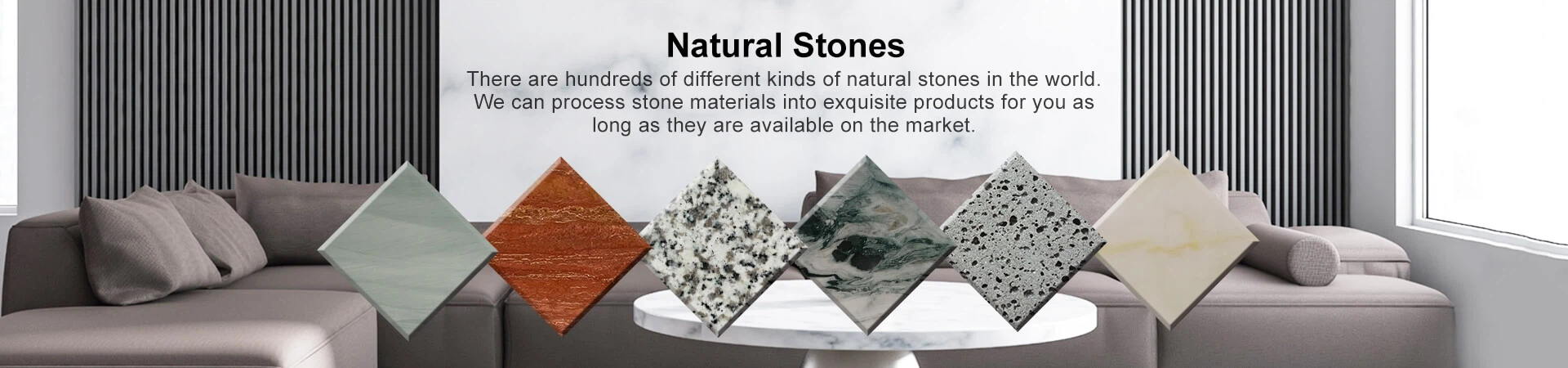
Natural Stone Application Strategy: Outdoor Granite vs. Interior Stone Materials
In architectural stone engineering, material selection is primarily determined by performance requirements, environmental exposure, and long-term maintenance expectations. Among natural stones, granite is widely specified for exterior applications, while marble, travertine, and limestone are predominantly used in interior environments due to their distinct geological structures and physical properties.
Granite for Outdoor Applications (Paving, Facades, Exterior Cladding)
Granite is an igneous rock formed under high-temperature and high-pressure conditions, resulting in a dense crystalline structure with exceptional mechanical strength. This makes it highly suitable for demanding exterior environments.

Key Performance Advantages:
1. High compressive strength and load resistance
Granite typically offers compressive strength above 150 MPa, making it ideal for high-traffic areas such as driveways, plazas, sidewalks, and municipal infrastructure.
2. Low water absorption and freeze-thaw stability
With very low porosity (often below 0.5%), granite resists water penetration. This significantly reduces risks of freeze-thaw cracking in cold climates and prevents long-term structural degradation.
3. Superior abrasion and wear resistance
Outdoor surfaces are exposed to continuous mechanical wear. Granite's interlocking mineral crystals (quartz, feldspar, mica) provide excellent resistance to scratching, impact, and surface erosion.
4. UV and weather resistance
Granite maintains color stability under prolonged UV exposure and is resistant to acid rain, pollution, and temperature fluctuations, making it suitable for exterior wall cladding and landscape paving.
5. Safety surface finishing options
Flamed, bush-hammered, and natural split finishes enhance slip resistance, making granite a preferred solution for outdoor safety-critical surfaces.

Marble, Travertine, and Limestone for Interior Applications
These stones are sedimentary or metamorphic in origin and are generally softer, more porous, and more decorative in nature. Their performance characteristics make them ideal for controlled indoor environments.
Marble (Interior Luxury and Architectural Detail)
Marble is valued for its crystalline structure and visual depth.
Advantages:
- High aesthetic value with natural veining and pattern variation
- Excellent polishability for mirror-like finishes
- Suitable for luxury interior design concepts
Common applications: flooring, wall cladding, staircases, columns, vanity tops
However, marble is calcium carbonate-based, making it sensitive to acids and moisture, which limits its use in exterior exposure.

Travertine (Warm Texture and Architectural Softness)
Travertine features natural voids and layered formations, creating a warm and organic appearance.
Advantages:
- Lightweight compared to dense stones
- Natural texture suitable for classic and contemporary interiors
- Good thermal performance for indoor environments
- Frequently used in feature walls, flooring, bathrooms, and decorative elements
Its porosity requires sealing, reinforcing its suitability for interior-only applications.

Limestone (Architectural Consistency and Neutral Design)
Limestone provides a uniform and calm visual tone widely used in architectural interiors.
Advantages:
- Consistent color palette suitable for large surface areas
- Easy to cut and fabricate into custom shapes
- Ideal for minimalist and modern interior design
Common applications: interior flooring, wall systems, stair treads, decorative elements
Like marble and travertine, limestone has moderate porosity and is not recommended for long-term exterior exposure in harsh climates.

3. Application Logic in Modern Stone Engineering
In professional construction practice, stone selection follows a simple engineering principle:
- Exterior systems require durability, density, and resistance → Granite
- Interior systems prioritize aesthetics, texture, and design flexibility → Marble, Travertine, Limestone
This functional separation ensures both structural reliability and architectural value optimization.

Conclusion
Granite remains the benchmark material for outdoor engineering due to its strength, durability, and environmental resistance. In contrast, marble, travertine, and limestone deliver superior architectural expression within interior environments where conditions are controlled.
A balanced material strategy ensures long-term performance while achieving high-end design outcomes across both exterior and interior applications.
Quanzhou Zhenhao Stone Industrial Co., Ltd. provides integrated sourcing, manufacture, and export solutions for granite and interior stone materials, supporting global construction and architectural projects with consistent quality control and customized processing capabilities.