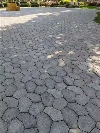
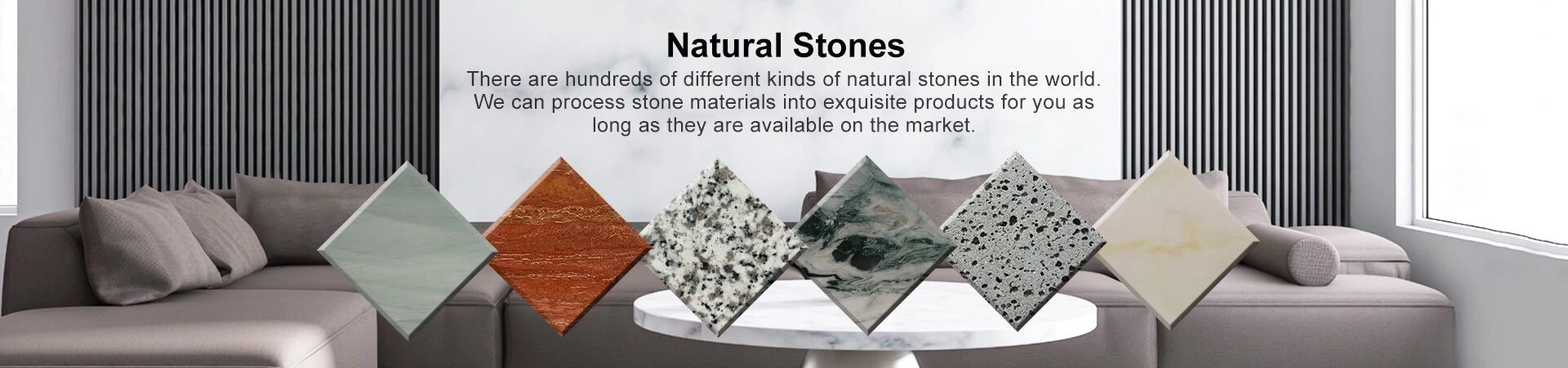
Regarding natural stone flooring types, the stones used for indoor and outdoor flooring generally differ.
For indoor applications, marble is predominantly used, with options such as travertine and limestone also available. These stones share similar properties to marble.
On the other hand, outdoor flooring typically revolves around granite, accompanied by other types like basalt, andesite, slate, and porphyry. As for the stone types, here is the stone for your reference : https://www.abdstone.com/all-kinds-of-stones
Indoor stone
- Beautiful texture: Marble has a variety of textures, some presenting the natural scenery of mountains and rivers, while others present the artistic beauty of artificial carving.
- Hard texture: Marble has a high hardness and is not easily subject to external wear and scratches.
- Strong corrosion resistance: Marble has stable chemical properties and is not easily corroded by chemicals such as acid and alkali.
- Highly decorative: commonly used for architectural decoration, such as floors, walls, columns, platforms, etc., which can increase the beauty and luxury of buildings.

- Porosity: Travertine stones are porous rocks, belonging to terrestrial sedimentary rocks and calcium carbonate sediments. When heavy stacking occurs, there will be pores, and because the main component is calcium carbonate, it is easily dissolved and corroded by water, there are many natural irregular pores.
- Rich texture: Natural Travertine stones have clear textures, gentle and rich textures, originating from nature and surpassing it. The finished product is dense and harmonious, as if it has just awakened from the soil, full of vitality.
- Diverse types: Roman Travertine stones have deep colors, distinct textures, and excellent materials, emitting a profound and noble temperament; Iran's Travertine stones and Türkiye's cave stones also have their own charms; The health cave stone has a light color, a crispy texture, and is light and soft.
- Easy to dissolve: Limestone is a type of carbonate rock that can be dissolved by water. Its main component is calcite, which is mainly composed of calcite (CaCO3) and sometimes contains dolomite, clay minerals, and detrital minerals.
- Colorful: Limestone comes in various colors such as gray, grayish white, gray black, yellow, light red, and brownish red, with gray, gray black, and gray white being the main colors.
- Moderate hardness: The hardness of limestone is generally not high, with a Mohs hardness between 3 and 3.5, and can be easily carved with a small knife.
- Widely used: Limestone can be used for agricultural soil improvement, pesticide production, building houses and decorations, making desiccants, insect repellents and disinfectants, manufacturing glass and soda ash, as a filling material for products, a hard water softener, a solvent for refining steel and removing vein stones, as well as for making food salts and medical applications.
Outdoor stone
- Homogeneity of lithology: Granite is the most widely distributed rock type on the surface, constituting the main body of the highly evolved continental crust in terms of chemical composition.
- Hard texture: Granite has a hard texture and a compressive strength of up to 117.7~196.1MPa, making it often considered a good building foundation.
- Good durability: Granite has high compressive strength, low porosity, low water absorption, fast thermal conductivity, good wear resistance, high durability, frost resistance, acid resistance, corrosion resistance, and is not easily weathered.
- Highly decorative: Granite not only has strong and practical properties, but its surface looks smooth and even with neat edges, so it is often used in indoor decoration and is considered a relatively high-end decorative stone.

- Dense structure: basalt is a kind of basic extrusive rock, which is a kind of compact or foam structure rock formed by the magma emitted from the volcano after cooling on the surface.
- High strength: Basalt has high durability and a dense structure, with a high compressive strength of up to 300MPa or even higher.
- Compressive and flexural strength: Basalt has excellent compressive and flexural strength, as well as good wear resistance and low water absorption. It is a very good building decoration material that can be widely used for indoor and outdoor decoration, and is mainly used as outdoor stone.

- Calcium alkaline extrusive rock: Andesite is a neutral calcium alkaline extrusive rock, whose composition is equivalent to diorite.
- Widely distributed: Andesite is second only to basalt in terms of distribution area, especially in the island arc zone and continental margin around the Pacific Ocean, where it is most abundant and often forms typical volcanic cones or rock flows, domes, and bells.
- Pore almond structure: andesite pores, blocky structures, some pores are filled with calcite, quartz, chlorite, etc., forming almond structures.

- Plate like structure: Slate is a type of sedimentary rock with a plate like structure and little to no recrystallization. The original rock is mudstone, silty or neutral tuff, which can be stripped into thin sections along the direction of the plate.
- Colorful: The color of slate varies with the impurities it contains, with iron containing materials being red or yellow. Carbonaceous materials are black or gray; Calcium containing materials will bubble when exposed to hydrochloric acid, so they are generally classified by their color, such as green slate, black slate, calcareous slate, rusty slate, etc.
- Compressive and wear-resistant: Slate is of hard quality and has good compressive, wear-resistant, corrosion-resistant and other characteristics. It can maintain its color for several years without discoloration, deterioration or deformation.


Porphyry (you may be referring to a type of "porphyry", but it is usually not directly used for flooring, listed here for information purposes)
- Magmatic rock: Porphyry usually refers to a type of magmatic rock with a porphyritic structure, which may contain various mineral crystals.
- Hard texture: Due to the characteristics of its igneous rocks, porphyries typically have a hard texture, but their specific properties may vary depending on the rock type and genesis.

Please note that although these stones are widely used in both indoor and outdoor decoration, the specific choice of stone depends on factors such as usage environment, decoration style, and budget. At the same time, the maintenance and upkeep methods of different stones also vary, so it is necessary to fully understand their characteristics and requirements when selecting and using them.