Understanding Stone Quality Grades: A vs B Material and Natural Characteristics
When sourcing natural stone, buyers often encounter terms like "A material," "B material," "black spots," "crystal lines," or "repaired holes." Understanding these grades is essential for balancing budget, appearance, and project performance.
Common Natural Characteristics in Stone
Natural stone is a product of nature, so it rarely looks like a synthetic laminate. The following features are normal but are graded differently depending on quality levels.
Black Spots (Mineral Inclusions)
Dark spots are often iron oxides or other minerals. In granite, small scattered black spots are acceptable in most grades. In B‑material, they may be larger or more frequent.


Crystal Lines (Veins or Hairline Cracks)
These are natural fissures or crystalline alignments. A‑material has very fine, tight crystal lines that do not affect structural integrity. B‑material may have more visible or open lines, sometimes requiring resin reinforcement.

Holes & Repairs (Pits, Vugs, or Filled Areas)
Some stones (e.g., travertine, certain marbles) have natural pinholes. High‑grade material has few, small holes that are professionally filled. B‑material may have larger or multiple holes, with more obvious patch marks.


A‑Material vs B‑Material: Key Differences
| Feature | A Material (Premium Grade) | B Material (Standard/Economy Grade) |
|---|---|---|
| Black spots | Few, small, evenly distributed | More, larger, or clustered |
| Crystal lines | Fine, tight, non‑structural | Visible, possibly open but stable |
| Holes & repairs | Minimal, repairs nearly invisible | More holes, patches visible under close inspection |
| Color variation | Very consistent between slabs | Noticeable variation, veining differences |
| Surface finish | Polished to high gloss (85+ GU for granite) | May have lower gloss or slight texture differences |
Important note: B‑material is not defective. It is simply a different grade suitable for less demanding applications. Many experienced buyers choose B material to reduce costs without compromising project function.
Choosing Grade Based on Application
The same stone can be A‑material for one use and perfectly acceptable as B‑material for another. The decision depends on visibility and wear conditions.
✅ When to Use A‑Material (Premium)
- Polished granite countertops – Kitchen islands, bar tops (visible, touch‑sensitive areas)
- Interior flooring in luxury spaces – Hotels, showrooms, lobbies (high expectation of uniformity)
- Stair treads and steps – Especially polished or honed finishes
- Vanity tops and wall cladding – Close viewing distance
For these applications, buyers expect clean surfaces, minimal repairs, and consistent color. Zhenhao Stone Company supplies A‑material with full slab inspection reports and gloss measurements. Visit www.abdstone.com to view A‑grade granite blocks and finished samples.
✅ When B‑Material is a Smart Choice
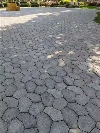
- Outdoor paving – Garden paths, driveways, pool surrounds (natural variations blend with environment)
- Rough stone walls or landscaping – Less critical finish
- Backsplash behind range hoods – Partially hidden, B‑material saves cost
- Large‑area commercial flooring with heavy traffic – Uniformity less important than durability
Example: B‑grade granite with visible black spots and slight color variation is widely used for outground paving (patios, walkways). The natural look is even preferred in many landscape designs.
How Zhenhao Stone Helps You Grade Correctly
Many suppliers mix grades or hide defects. Zhenhao Stone Company (www.abdstone.com) follows transparent classification:
- A‑material: Selected blocks, minimal natural marks, polished edges, consistent color – ideal for countertops, steps, indoor floors.
- B‑material: Good structural soundness but with more black spots, crystal lines, or repaired holes – recommended for outdoor paving, backings, or non‑critical areas.
They provide slab‑by‑slab photos and video inspection before packing. For B‑material, they clearly mark repaired areas on a drawing so you know exactly what you are getting.
Final Advice for Buyers
- Always request grade samples photos – A and B samples photos for reference only.
- Match grade to use – Don't pay A price for a B application, and don't use B material where appearance is critical.
Visit www.abdstone.com to request a grade comparison chart or a trial shipment. Whether you need premium A‑material for polished countertops or economical B‑material for outdoor paving, Zhenhao Stone delivers the right quality at the right price.
Keywords: stone quality grades, A vs B stone material, natural stone defects acceptance