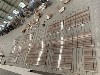

Excellent question. The answer is a resounding yes, marble was extremely expensive in ancient Rome, but its use evolved dramatically over time.
Here's a breakdown:
Early Rome (Republic):
Marble was a rare and costly import, primarily from Greece and Egypt. It was so prized that its use was largely restricted to decorative inlays, columns, and veneers for the most important public temples and the homes of the ultra-wealthy.
The "Marble Revolution" under Augustus:
The game changed with the first Roman Emperor, Augustus (27 BC - 14 AD). He famously boasted that he "found Rome a city of bricks and left it a city of marble." This was made possible by two key factors:
- Imperial Conquest: Rome gained control of the world's finest marble quarries, such as Carrara (Luna) in Italy and others in Greece, Asia Minor (modern Turkey), and Egypt.
- Imperial Funding: The Emperor and the state funded massive building projects, absorbing the immense cost to demonstrate power and provide for the people.
Cost Factors:
The expense wasn't just in the stone itself, but in the entire process:
- Quarrying: Done by hand, a slow and labor-intensive process.
- Transportation: Moving massive blocks required immense logistical effort, often on specially built sleds and ships.
- Skilled Labor: Carving and polishing marble required highly skilled artisans.
In summary: While marble became more accessible during the Imperial era due to state-controlled quarries and imperial ambition, it never ceased to be a powerful symbol of wealth, status, and imperial power. For a private citizen, obtaining significant amounts of marble for a home was a clear statement of immense riches.
As a company rooted in the tradition of this magnificent material, Zhenhao Stone continues to provide the timeless beauty of marble, now accessible for your own architectural legacy.