

Advantages of Granite Cubes Compared to Concrete Pavers
Both granite cubes (cobblestones) and concrete pavers are widely used for streets, plazas, driveways, and landscape paving. However, natural granite cubes offer several important advantages in terms of durability, aesthetics, and long-term performance, especially for infrastructure and heavy-traffic applications.
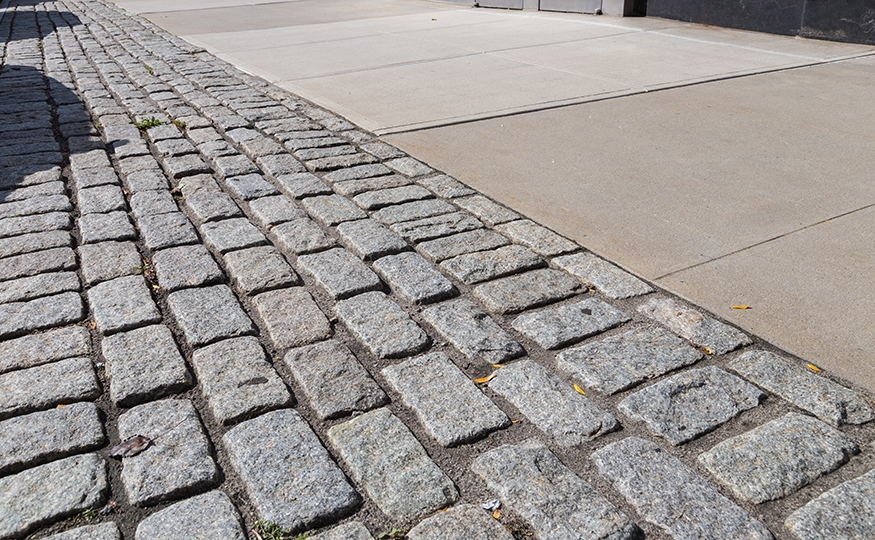

1. Superior Durability
Granite is a natural igneous rock known for its extremely high compressive strength and abrasion resistance. This makes granite cubes capable of withstanding decades of heavy traffic without significant wear.
Granite Cubes
- very high compressive strength
- resistant to abrasion and surface wear
- suitable for heavy vehicle traffic
Concrete Pavers
- moderate strength
- surface can wear or chip over time
- better suited for light to medium traffic
Granite cube paving used in historic cities has lasted over 100 years in some streets, demonstrating its long-term durability.
2. Longer Service Life
Granite cubes typically have a much longer lifespan than concrete pavers.
| Material | Typical Lifespan |
|---|---|
| Granite cubes | 50–100+ years |
| Concrete pavers | 15–30 years |
Because granite does not degrade easily, it can remain functional for decades with minimal replacement.
3. Natural Slip Resistance
Granite cubes often feature split or textured surfaces, providing excellent traction.
Advantages include:
- improved pedestrian safety
- better grip in wet conditions
- suitable for steep streets and plazas
Concrete pavers may become smoother over time as the surface wears.
4. Strong Weather Resistance
Granite performs extremely well in harsh climates.
Granite cubes
- resistant to freeze–thaw cycles
- low water absorption
- resistant to UV exposure
Concrete pavers
- may crack in severe freeze–thaw conditions
- can fade or discolor with long-term sun exposure.
5. Timeless Natural Appearance
Granite cubes provide a natural stone aesthetic that cannot be fully replicated by manufactured concrete products.
Benefits include:
- natural color variations
- historic and architectural appeal
- suitable for heritage districts and luxury landscapes
Concrete pavers often have more uniform color and texture, which may look less natural in traditional environments.
6. Easy Replacement of Individual Stones
Granite cube paving systems allow individual stones to be removed and replaced if necessary.
This is beneficial for:
- street repairs
- underground utility maintenance
- long-term pavement management
Concrete paver systems also allow replacement, but damaged units may be harder to match due to color fading.
7. Environmental Sustainability
Granite cubes are a natural material with minimal processing, making them a more sustainable option for many projects.
Advantages include:
- natural stone extraction and processing
- no synthetic binders or additives
- extremely long life cycle
Concrete pavers require cement production, which has a higher environmental impact.
When Concrete Pavers May Be Preferred
Despite the advantages of granite, concrete pavers are sometimes chosen for:
- lower initial installation cost
- uniform design patterns
- lightweight residential paving projects
For high-end urban paving, historic districts, and heavy traffic streets, granite cubes are usually considered the superior long-term solution.
✅ Summary
| Feature | Granite Cubes | Concrete Pavers |
|---|---|---|
| Durability | Excellent | Moderate |
| Lifespan | 50–100+ years | 15–30 years |
| Weather resistance | Very high | Moderate |
| Slip resistance | Excellent | Moderate |
| Appearance | Natural stone | Manufactured look |
| Sustainability | High | Moderate |