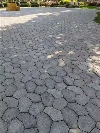

Potential Risks of Granite Pavers: What You Need to Know
While granite is one of the most durable and long-lasting paving materials available, there are a few considerations and potential risks to be aware of before installation.

1. Slipperiness When Wet
Granite has a naturally smooth surface, which can become slippery when wet, especially in high-traffic outdoor areas like pool decks, driveways, or walkways.
✅ Mitigation:
Choose flamed, bush-hammered, or textured finishes for better traction.
Apply anti-slip sealants if a polished finish is preferred.
2. Initial Cost Investment
Granite is a premium material, making it more expensive upfront compared to concrete, brick, or some other natural stones.
✅ Mitigation:
Consider it a long-term investment-granite's durability reduces replacement costs over time.
Compare prices from multiple suppliers for competitive rates.
3. Weight and Installation Complexity
Granite pavers are extremely heavy, requiring:
A properly engineered base (compacted sub-base and bedding layer).
Professional installation to prevent shifting or uneven settling.
✅ Mitigation:
Hire experienced contractors familiar with natural stone paving.
Ensure proper drainage and base preparation to avoid future issues.
4. Natural Color Variations
Since granite is a natural stone, color and veining can vary between batches. Some clients may expect uniform aesthetics.
✅ Mitigation:
Request samples before purchasing.
Blend pavers from multiple pallets during installation for a more consistent look.
5. Rare but Possible Cracking (Under Extreme Conditions)
While granite is highly resistant to cracking, improper installation or extreme force (e.g., heavy machinery impact) can cause damage.
✅ Mitigation:
Use a thicker paver (30mm+ for driveways, 20mm+ for walkways).
Avoid dropping heavy objects directly on the surface.
6. Staining (If Unsealed & Highly Porous Granite is Used)
Most granite is low-porosity, but some lighter-colored varieties may absorb oils or chemicals if left unsealed.
✅ Mitigation:
Apply a penetrating sealer for added stain resistance (optional).
Clean spills promptly with a pH-neutral stone cleaner.
Conclusion: Minimal Risks with Proper Planning
Granite pavers remain one of the safest and most reliable hardscape choices, with most risks being manageable through:
✔ Professional installation
✔ Correct finish selection (textured for slip resistance)
✔ Basic maintenance (cleaning, occasional sealing if needed)
For high-end, long-lasting paving, granite's benefits far outweigh its minimal risks.
Interested in granite pavers? Consult Diana ( email : diana@zhenhaostone.com or wechat: diana_peng1984 ) for the best selection and installation guidance.