
Proper base preparation is essential for granite cube paving (granite setts or cobblestones). A well-constructed base prevents settlement, maintains surface stability, and allows the pavement to withstand pedestrian loads, vehicles, and long-term weather exposure.
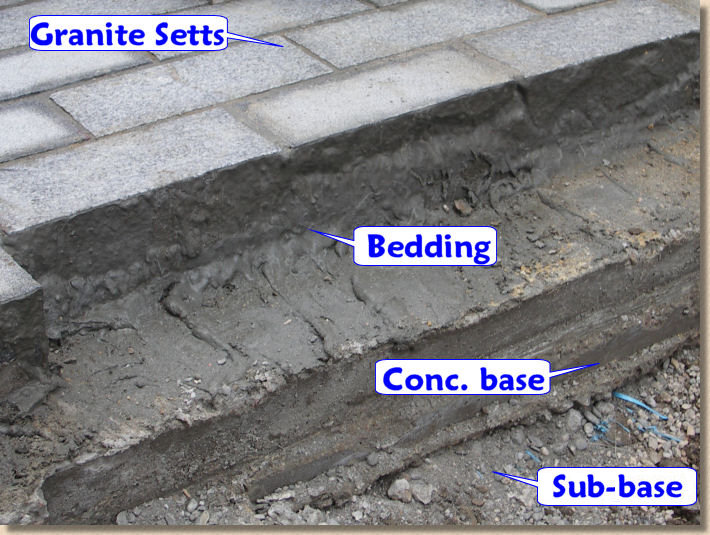
The base typically consists of three structural layers:
- Subgrade (existing soil preparation)
- Compacted sub-base
- Bedding layer
Each layer plays a critical role in the durability of the paving system.
1. Subgrade Preparation (Foundation Soil)
The subgrade is the natural soil that supports the paving structure.
Preparation steps
- Excavate the area to the required depth.
- Remove organic soil, clay pockets, and loose material.
- Level and compact the soil using a roller or plate compactor.
- Ensure proper drainage to prevent water accumulation.
Typical excavation depth
| Application | Total Excavation Depth |
|---|---|
| Pedestrian paving | 150–200 mm |
| Driveways | 200–300 mm |
| Municipal streets | 300–400 mm |
A stable subgrade prevents future sinking or uneven paving surfaces.
2. Sub-Base Layer (Load Distribution)
The sub-base is the main structural layer that distributes traffic loads.
Common materials
- crushed stone
- road base aggregate
- compacted gravel
Installation method
- Spread aggregate in layers of 80–100 mm.
- Compact each layer with a plate compactor or roller.
- Continue until the required thickness is achieved.
Typical sub-base thickness
| Application | Sub-Base Thickness |
|---|---|
| Walkways | 80–120 mm |
| Residential driveways | 120–180 mm |
| Streets and heavy traffic | 200–300 mm |
A properly compacted sub-base improves load bearing capacity and drainage.
3. Bedding Layer (Stone Placement Layer)
The bedding layer allows installers to level and adjust granite cubes before final compaction.
Common bedding materials
- coarse sand
- sand-cement mixture
- mortar bedding (for heavy traffic areas)
Recommended thickness
| Bedding Type | Thickness |
|---|---|
| Sand bedding | 30–50 mm |
| Sand-cement bedding | 30–40 mm |
| Mortar bedding | 20–30 mm |
The bedding layer should be leveled but not compacted before stone placement.
4. Granite Cube Placement
After the bedding layer is prepared:
- Place granite cubes tightly together.
- Maintain joint spacing of 5–10 mm.
- Tap stones into position using a rubber hammer.
Follow the selected paving pattern (fan, arc, or straight pattern).
5. Edge Restraints
Edge restraints are necessary to prevent stone movement.
Common options:
- concrete curbs
- stone kerbs
- steel edging
- concrete edge beams
They maintain the structural integrity of the paving surface.
6. Joint Filling and Final Compaction
After laying the stones:
- Spread joint material across the surface.
- Sweep it into the joints.
- Compact the paving with a vibratory plate compactor.
- Refill joints if necessary.
Joint materials
- sand
- polymeric sand
- cement mortar
Key Tips for Long-Lasting Granite Cube Paving
- Always ensure proper drainage in the base layers.
- Use adequate sub-base thickness for traffic loads.
- Compact each layer thoroughly.
- Install edge restraints before final compaction.
When these base preparation steps are followed correctly, granite cube paving can last for decades, making it one of the most reliable paving systems for streets, plazas, and landscape projects.