
Porphyry Stone: Origin and Common Types in China (Industry Overview)
Porphyry is a natural igneous rock formed through volcanic activity, where large mineral crystals are embedded in a fine-grained matrix. Due to its dense structure, high compressive strength, and excellent abrasion resistance, porphyry is widely used in infrastructure paving, urban landscaping, and heavy-duty outdoor applications.
1. Where Porphyry Is Found Globally
Porphyry deposits are distributed in several volcanic and tectonic regions around the world. Major sources include:
- Italy (historically well-known for red porphyry paving stone)
- China (various regions with volcanic rock formations)
- Germany and Central Europe (limited but high-quality deposits)
Among these, China is one of the most active production bases for commercial porphyry paving materials, especially for export-oriented infrastructure projects.
2. Types of Natural Porphyry in China
In the Chinese stone industry, porphyry is commonly classified by natural color variations caused by mineral composition. The main commercial categories include:
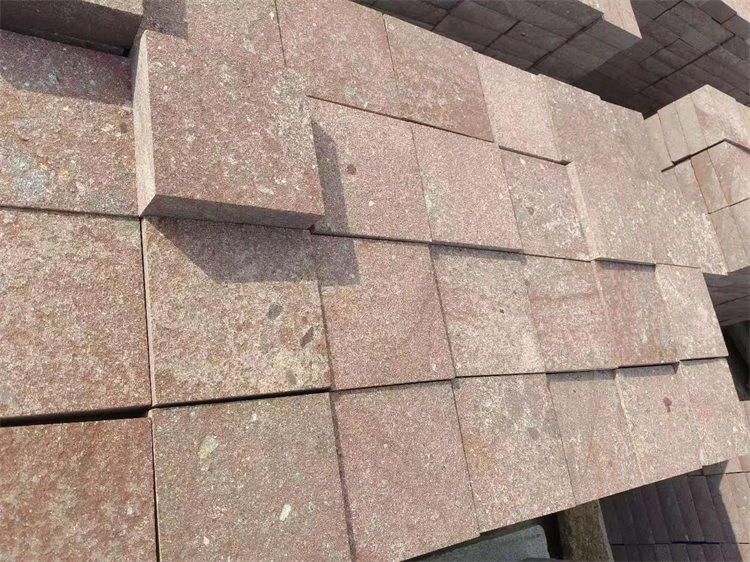
Red Porphyry
- Most widely produced and exported type
- Stable supply and relatively abundant reserves
- High hardness and excellent durability
- Most cost-efficient option in the porphyry category
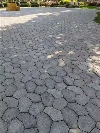
- Widely used in municipal paving and pedestrian streets
Grey Porphyry
- Neutral color tone, suitable for modern urban design
- Slightly more controlled supply compared to red
- Often used in mixed paving patterns

Purple Porphyry
- Distinctive color variation with decorative appeal
- More limited quarry sources
- Used in premium landscape and architectural projects
Green Porphyry
- Rare material with strong visual identity
- Typically used in high-design landscape applications
- Higher cost due to limited availability

Brown Porphyry
- Earth-tone appearance suitable for natural-style landscapes
- Moderate production scale
- Often used in parks and heritage-style projects

3. Cost Structure and Market Position
Among all commercial porphyry types, red porphyry is generally the most economical option due to:
- Larger quarry availability
- Stable extraction output
- Efficient processing and lower waste ratio
- High demand in municipal infrastructure projects
In contrast, green and purple porphyry are positioned in a higher price range due to limited geological occurrence and selective extraction.
4. Industry Application Insight
Porphyry is typically selected based on performance rather than decoration. Engineers and contractors choose it for:
- Heavy pedestrian traffic areas
- Public infrastructure projects
- Long-term durability requirements
- Slip-resistant outdoor surfaces
- Cost-effective large-area paving solutions
Red porphyry remains the benchmark material for cost-controlled municipal paving projects, while other colors are used for design differentiation.
5. Summary
Porphyry is a globally distributed volcanic stone, with China supplying multiple commercial color variants including red, grey, purple, green, and brown. Among these, red porphyry dominates the market due to its availability, durability, and cost efficiency, making it the most widely used option in large-scale infrastructure and landscaping projects.