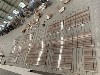

Porphyry's rarity stems from a combination of geological constraints, historical significance, and limited quarries. Here's a breakdown of the key factors:
1. Unique Geological Formation
Two-Stage Cooling Required: Porphyry forms when magma cools slowly at depth (forming large phenocrysts) and then erupts or moves upward, rapidly solidifying the fine-grained matrix. This specific cooling process is uncommon.
Limited Magmatic Conditions: Not all volcanic or intrusive settings produce porphyritic textures. The right balance of chemistry, pressure, and cooling rate is rare.
2. Historical Exploitation & Lost Sources
Imperial Porphyry (Mons Porphyrites, Egypt):
The only known source of true purple porphyry in antiquity was mined exclusively for Roman and Byzantine emperors.
Quarries were deliberately abandoned and lost after the 5th century, making original purple porphyry nearly unobtainable today.
Modern Quarries Are Few: Active porphyry quarries exist in Italy (Trentino), Argentina, and a few other regions, but output is limited.
3. High Demand, Low Supply
- Architectural Prestige: Porphyry's historical association with power (e.g., Roman imperial sarcophagi, Byzantine churches) drives demand.
- Durability Premium: Its unmatched strength for paving/cladding makes it a luxury material, but extraction is labor-intensive.
4. Color Rarity
- Purple Porphyry: The iconic violet-red hue (from manganese and hematite) is geologically exceptional. Most modern porphyry is green, brown, or gray.
- No Synthetic Substitute: Unlike marble or granite, porphyry's texture and colors cannot be replicated artificially.
Conclusion
Porphyry is rare because it requires perfect geological conditions, has limited active quarries, and carries centuries of elite demand. Today, genuine porphyry-especially imperial-grade-is a vanishing luxury, with some antique pieces fetching museum-level prices.