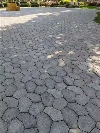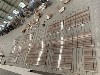

Granite continues to be one of the most dependable natural stones for construction and architectural projects. For contractors, selecting the right granite involves more than choosing a color or finish. Material performance, processing precision, installation requirements, logistics coordination, and long-term durability all play important roles in project success.

Whether the project involves exterior paving, façades, staircases, landscaping, or commercial flooring, understanding granite specifications and procurement considerations can help reduce construction risk and improve overall project efficiency.

1. Why Granite Is Widely Used in Construction
Granite is an igneous natural stone formed under high geological pressure, resulting in excellent hardness and structural stability. Its durability makes it suitable for both interior and exterior applications.
Common Contractor Applications
- Exterior façades
- Outdoor paving and plazas
- Swimming pool coping
- Stair treads and risers
- Landscape paving
- Commercial flooring
- Driveways and walkways
- Public infrastructure projects
Granite performs well in demanding environments where long-term wear resistance is required.
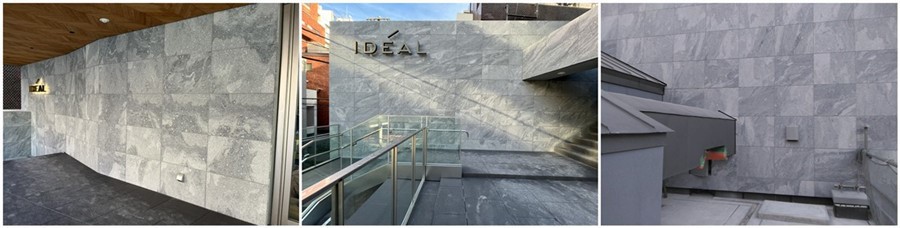
2. Granite Technical Properties Contractors Should Understand
Density and Weight
Granite typically has a density of:
2.6–3.0 tons per cubic meter
This affects:
- Structural calculations
- Transportation planning
- Lifting requirements
- Installation methods
Darker granite varieties are often denser and harder.
Water Absorption
Granite generally has low water absorption, making it suitable for:
- Outdoor paving
- Pool areas
- Wet environments
- Freeze-thaw climates
However, sealing may still be recommended for certain applications.
Compressive Strength
Granite offers strong load-bearing performance, which is why it is commonly used for:
- Massive stone steps
- Vehicle-access paving
- Commercial flooring
- Heavy-duty public areas
3. Choosing the Right Granite Finish
Surface finish affects both appearance and functionality.
Polished Finish
- Reflective appearance
- Mainly used indoors
Honed Finish
- Matte surface
- Softer visual effect
Flamed Finish
- Rough anti-slip texture
- Suitable for outdoor paving and stairs
Bush Hammered Finish
- Strong slip resistance
- Suitable for wet outdoor areas
Natural Split Finish
- Rustic appearance
- Frequently used in landscape projects
- For exterior projects, anti-slip finishes are usually recommended.
4. Granite Sizes and Thickness
Proper size selection improves:
- Installation efficiency
- Material utilization
- Transportation control
- Cost management
Common Tile Thickness
15 mm
20 mm
25mm
30 mm
Outdoor Paving Thickness
- 30–50 mm for pedestrian areas
- 80–100 mm for driveways or heavy-use paving
Granite Cube Sizes
- 10×10×5 cm
- 10×10×10 cm
Contractors should match thickness and format to actual load requirements.
5. Granite Protection and Maintenance
Although granite is highly durable, proper maintenance improves long-term performance.
Recommended Protection
- Use penetrating sealers where necessary
- Ensure proper drainage outdoors
- Select suitable installation systems
- Use anti-slip surfaces in wet areas
Maintenance Suggestions
- Clean with pH-neutral products
- Avoid acidic chemicals on polished granite
- Periodically inspect joints and sealants
6. Budget and Quality Considerations
Not all projects require the same material grade.
Premium Granite
Suitable for:
- Luxury villas
- Hotels
- Commercial landmarks
- High-end architectural projects
These projects often require:
- Strict color consistency
- Precision processing
- Refined finishes
Economical Granite Solutions
For budget-sensitive projects, contractors may optimize cost through:
- Practical size planning
- Alternative granite selections
- Flexible color variation tolerance
- Simplified processing requirements
This approach helps balance durability and budget control.
7. Logistics and Packaging
Granite is heavy and requires careful transportation planning.
Common Packaging Methods
- Wooden export crates
- Reinforced bundles
- Protective corner support
Container loading efficiency and project delivery schedules are important considerations for large-scale projects.
FAQ
1. Is granite suitable for exterior projects?
Yes. Granite is highly resistant to weather, abrasion, and temperature variation.
2. Which granite finish is best for outdoor paving?
Flamed and bush-hammered finishes are commonly used because of their anti-slip properties.
3. Can granite sizes be customized?
Yes. Granite products can be processed according to project drawings and specifications.
4. Does granite require sealing?
Granite is less porous than many natural stones, but sealing may still improve stain resistance and long-term maintenance.
5. What is the most common granite paving size?
10×10×5 cm and 10×10×10 cm granite cubes are widely used in outdoor paving projects.
6. Is granite suitable for swimming pool areas?
Yes. Granite performs well around pools due to its durability and water resistance.
7. What affects granite project cost?
Stone origin, thickness, finish, processing complexity, size, and transportation all influence cost.
Conclusion
For contractors, granite remains a practical and reliable material for both interior and exterior construction projects. Understanding granite specifications, finishes, installation requirements, and project-based material selection helps improve construction quality, reduce long-term maintenance, and optimize overall project performance.