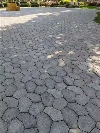

Granite is one of the most widely used natural stones in residential, commercial, and infrastructure construction. Its durability, structural strength, and natural appearance make it suitable for a broad range of applications, including façades, flooring, paving, staircases, landscaping, and public spaces. We sincerely welcome cooperation with contractors, architects, designers, developers, and private homeowners worldwide.

However, successful granite procurement for projects requires more than selecting a stone color. Material grade, technical specifications, processing quality, logistics planning, and installation requirements all influence project performance and overall cost control.
1. Define the Project Application First
Different applications require different granite specifications.
Exterior Applications
For outdoor use, granite should provide:
- Weather resistance
- Frost resistance
- Slip-resistant surface finishes
- Stable structural performance

Common exterior applications include:
- Outdoor paving
- Pool coping
- Staircases
- Façade cladding
- Landscape elements
Flamed, bush-hammered, or natural split finishes are usually recommended for outdoor safety.

Interior Applications
Interior granite projects often focus more on:
- Color consistency
- Surface polish quality
- Decorative appearance
- Dimensional precision
Common applications include:
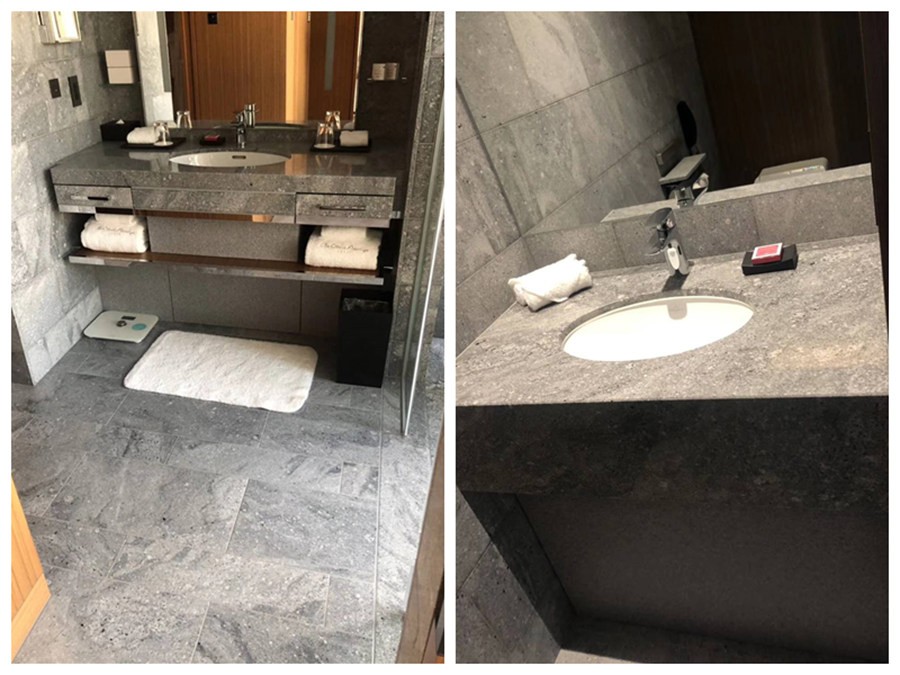
- Lobby flooring
- Wall cladding
- Kitchen countertops
- Vanity tops
- Interior staircases
2. Select the Appropriate Granite Type
Granite selection should balance:
- Design requirements
- Structural performance
- Budget considerations
- Project location
Different granite colors and origins may vary in:
- Density
- Water absorption
- Hardness
- Pattern consistency
- Availability
Darker granite materials are often denser and harder, while lighter colors may require more careful material selection depending on usage conditions.
3. Determine Suitable Sizes and Thickness
Granite dimensions directly influence:
- Transportation efficiency
- Installation complexity
- Structural stability
- Material utilization rate
Common Granite Tile Thickness
15 mm
20 mm
30 mm
Outdoor Paving Thickness
30–50 mm for pedestrian areas
80–100 mm for vehicular paving
Granite Cube Sizes
- 10×10×5 cm
- 10×10×10 cm
Custom paving dimensions
Optimizing dimensions can significantly reduce material waste and project costs.
4. Evaluate Surface Finishes Carefully
Surface finish affects both appearance and functionality.
Polished Finish
Smooth reflective surface
Common for interiors
Honed Finish
Matte appearance
Softer visual effect
Flamed Finish
Rough anti-slip texture
Suitable for outdoor paving
Bush Hammered Finish
Heavy textured surface
Improved traction in wet environments
Natural Split Finish
Rustic appearance
Common in traditional landscaping projects
Selecting the proper finish is especially important for safety-sensitive outdoor applications.
5. Understand Granite Density and Weight
Granite typically has a density of:
2.6–3.0 tons per cubic meter
Stone weight affects:
- Structural calculations
- Transportation cost
- Lifting equipment requirements
- Installation planning
Large-format slabs and massive stone elements require proper engineering coordination.
6. Consider Material Grade and Quality Expectations
Not all projects require the same material standard.
High-End Projects
Luxury hotels, villas, and commercial developments often require:
- Strict color consistency
- Minimal natural defects
- Precision processing
- Higher surface finish quality
These materials generally involve higher processing standards and cost.
Budget-Oriented Projects
For projects with flexible appearance requirements, more economical material selections may be suitable while still maintaining structural performance.
Balancing quality expectations with actual project needs helps improve procurement efficiency.
7. Evaluate Packaging and Logistics
Proper packaging is critical for international projects.
Granite products are commonly packed using:
- Reinforced wooden crates
- Steel-supported bundles
- Protective foam or plastic layers
For large-scale projects, container loading efficiency and shipment coordination should also be considered during procurement planning.
8. Stone Protection and Maintenance Planning
Although granite is highly durable, preventive maintenance improves long-term performance.
Recommended Measures
- Apply penetrating sealers where necessary
- Ensure proper drainage in exterior paving
- Use appropriate installation systems
- Periodically inspect joints and sealants
Long-term maintenance planning helps reduce future operational costs.
FAQ
1. What granite finish is best for outdoor paving?
Flamed and bush-hammered finishes are commonly recommended due to their anti-slip properties.
2. How do I choose the right granite thickness?
Thickness depends on load requirements, installation method, and project location.
3. Is granite suitable for cold climates?
Yes. Granite performs well in freeze-thaw conditions when properly installed.
4. Can granite be customized for projects?
Yes. Sizes, finishes, edge profiles, and packaging can all be customized.
5. Does granite require sealing?
Granite is less porous than many natural stones, but sealing may still improve stain resistance.
6. What affects granite project cost most?
Material selection, thickness, finish, slab size, processing complexity, and logistics all influence total cost.
Conclusion
Granite procurement for projects requires careful coordination between design goals, technical performance, budget planning, and installation requirements. By selecting suitable materials, dimensions, and finishes, project teams can achieve durable and cost-efficient natural stone solutions for both interior and exterior applications.