Mosaics Designs
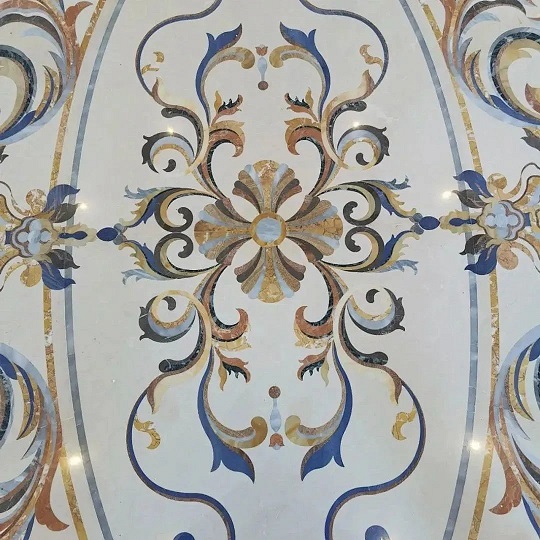
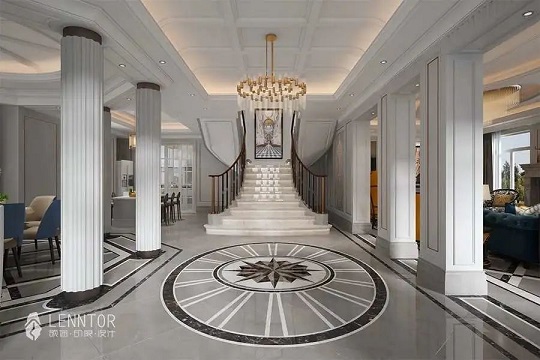
Different designers have different design styles. Some designers prefer European style and pursue the beauty of Baroque intricate and luxurious design. Some designers enjoy the subtle beauty of Chinese style and the peaceful and auspicious atmosphere of Chinese style. As for the style of mosaic design, it is up to the consumer to propose their own requirements for the design style based on their demands.
If consumers do not have any requirements for the design style of mosaic, design mosaic based on the function and style of the decorated building or object. When the style of the building itself is European style, the corresponding design is European style patchwork, which is more in line with the environmental atmosphere of the building. If the style of the building is simple, designing a simple mosaic style is more suitable.
We believe that the mosaic inside the elevator car should be simplified and there is no need to make it into a European style mosaic.The mosaic decoration style of luxury cruise ships is designed to enhance the level of luxury cruise ships and reflect a luxurious and atmospheric style. It is better to design European style antique mosaic decorations. In short, the design style of mosaic can be flexible, but it should be determined based on the style and function of the building or the decorated object itself.
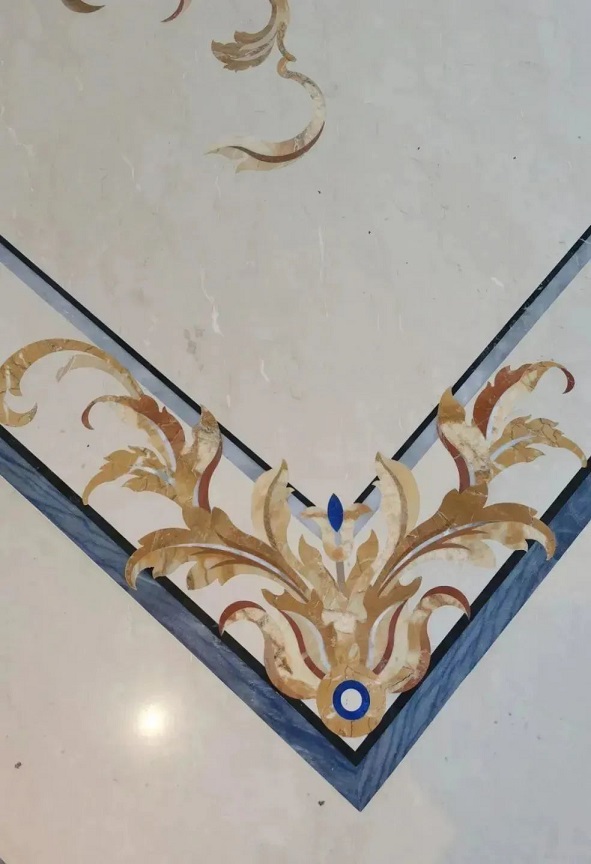
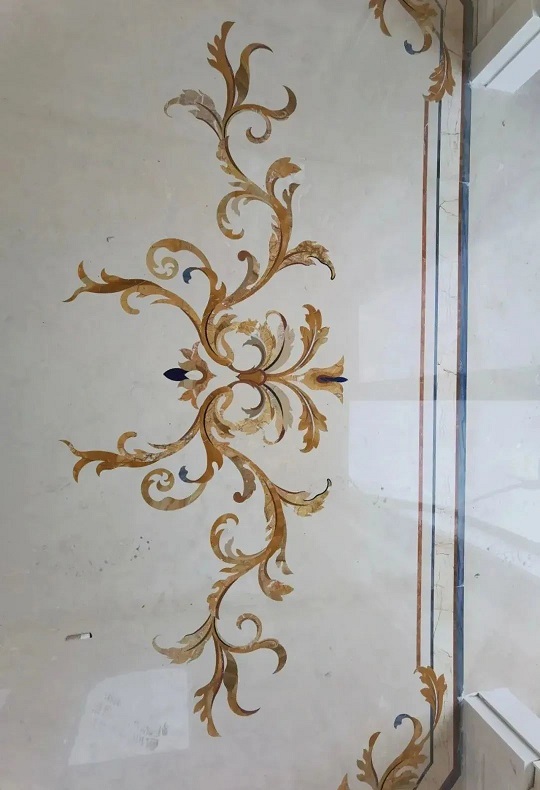
The style of flower arrangement in Figure 1 is more suitable for children's rooms than in Figure 2, as it is more lively and interesting, making children happy and joyful.

Principles of mosaic pattern design
(1) Principles of Innovation
The mosaic products are rich and diverse, with numerous categories. You can find a lot of mosaic patterns in a random mosaic gallery, which provides convenience for mosaic design. However, mosaic design cannot be blindly imitated or copied. Designers can have their own thinking and ideas based on borrowing some patterns, dare to break through, and innovate.
The original mosaic design may not be the best, only products that are suitable for the artistic conception of buildings and decorations are the best and most beautiful. The best innovative way in mosaic design is to draw beneficial elements from nature, integrating the beautiful scenery and natural changes of nature into the design of mosaic products, making them more natural and flavorful.
The mosaic in Figure 3 is highly artistic and has great appreciation value in my opinion. The reason for this is that the mosaic in this painting is very artistic and innovative. It originates from the scenery of nature, uses accurate materials, and the gray mountains and white snow in the distance complement each other, reflecting the magnificent scenery of nature's pure white winter.

(2) Simplification principle
We have a wrong design concept in mosaic design, which believes that the more complex the curves, the more beautiful and captivating they are. When designing mosaics, we make the patterns very complex and fancy, thinking that this is the only way to express beauty. This is a wrong concept. The drawing of comics is very simple, with just a few strokes depicting the characters vividly and expressively, evoking resonance and contemplation. The expression of abstract painting is also like this, the drawing of a few random lines contains profound meanings that make people ponder and imagine.
The design of patchwork can simplify and simplify while meeting basic decorative requirements. The lines that can be omitted are omitted, and the lines of patchwork that do not need to be messed with are dazzling and flashy, thinking that this is patchwork. This is what art is all about.
The mosaic image in Figure 4 is very simple, with just a few strokes and simple lines outlining the vivid patterns of flowers, which has excellent artistic decoration.

(3) Economic principle
The principle of economy is also the principle of cost. No matter how good the product is, it does not pay attention to the principle of economy, high production costs, and high prices are ultimately not accepted or recognized by anyone. This product cannot be called a commodity, it can only be called a product and has no value. Therefore, mosaic design should start from economic principles when designing, creating beautiful and affordable products that consumers can afford and products can be transformed into commodities.
The mosaic pattern in Figure 5 is too complicated. Although this mosaic is luxurious and beautiful, it has low processing efficiency and high cost due to its complexity. The high selling price of this mosaic after processing may affect its sales volume in the market.

(4) Principle of Production Efficiency
Some designers only consider the design effect of patchwork, which is cumbersome and leads to great difficulty in factory production and processing, even to the point where production employees complain endlessly, making it difficult to process. A good design scheme for mosaic products should not overly pursue effect, but also take into account the processing performance of the product. No matter how good the design scheme is, it can not achieve the transformation of the product, it can only be just a paper talk. In today's utilitarian society, production efficiency is equal to economic benefits, so the design of patchwork must start from production efficiency and take into account the interests of producers.
The mosaic pattern in Figure 6 is complex, difficult to process, and has low production efficiency. It is not easy to produce high-quality products. It is impossible to mass produce this product.

(5) Starting from the public interest
Consumers often bargain when buying products. If the price of one square meter mosaic is often over a thousand Chinese yuan , or even tens of thousands of Chinese yuan, it becomes the patent of the aristocracy. When the general public cannot afford it, the sales volume of such a good decorative product in the market will be greatly affected. Therefore, the design of mosaic should be based on the interests of the public, and the price of the mosaic products should be affordable for the general public while meeting the requirements of good decorative functions. This is the right path.
Compared to Figure 8, Figure 7 mosaic is simpler, easier to process, and has a lower product price, making it more easily accepted by the public. Unless the customer requests a complex mosaic similar to Figure 8, mosaic design is often based on the public interest and designed at a price that the public can afford. Only then can mosaic products have a market and sales volume.


(6) Product safety
The design of mosaic should start from the safety of the product, consider the safety issues of the entire chain from production to consumption, and ensure the safety of mosaic products from production, construction, use, and maintenance. This requires strict requirements for the material (cracks in the mosaic material), material thickness (the thickness of the mosaic material cannot be less than 18mm), and product processing technology (how to bond and reinforce the embedded three-dimensional mosaic) in order to ensure the safety of the mosaic.
The installation method of wall mounted mosaic should be carefully considered, and an absolutely safe and reliable installation method should be adopted to prevent the mosaic from falling and injuring people. The installation of mosaic is better done by dry hanging method, using metal reinforcement to fix the mosaic product. Splicing products can be made into aluminum honeycomb composite panels, which are lightweight, high in safety, and more secure.
(7) Convenient product construction
In order to pursue the design effect of patchwork and reduce the seams of patchwork, it is often seen that the design of patchwork is large and heavy, without considering the difficulty of transportation and installation by the construction personnel during construction. As the last hurdle in mosaic manufacturing, on-site construction conditions often do not allow large-sized mosaics to enter the construction site. For the convenience of mosaic construction and to reduce weight, it is very important to have a reasonable division size for mosaic design. This is a problem that mosaic designers need to consider when designing mosaics.
(8) Convenient maintenance in the later stage
When selecting materials for mosaic design, it is necessary to consider whether the stone used for mosaic is beneficial for the user's maintenance during later use. If white stone is used for patchwork, there may be a problem of yellowing. The problem of crack expansion and fracture during the use of stone with multiple cracks. The problem of dust and sand particles entering the capillary pores of stone with many sand holes during use, causing the surface of the stone to turn black. Surface cleaning and cleaning issues during the use of three-dimensional mosaic.
In practical use, mosaic tiles will face these problems. These are issues that designers need to carefully consider and coordinate during mosaic design.